Why Are There So Many Castles in Scotland: Clans, Borders and Stone
Why are there so many castles in Scotland? Clan feuds, border war with England and cheap stone left one small country full of towers. The real reasons.
Why are there so many castles in Scotland? Defence here stayed a private job for roughly four hundred years, so lairds, clan chiefs and border families each built a strong house of their own instead of relying on a royal army. Add stone that was easy to quarry, a war with England that kept restarting, and neighbours who feuded in the gaps, and a small country fills up with towers.
England went through the same stage and left it early. Scottish landowners carried on building fortified homes long after English ones had moved into open country houses, and that single difference explains most of the gap in numbers. For the background on the whole idea, read our guide on what castles were built for in the first place.
Why Scotland ended up with so many castles
Five things stacked up at once.
- Weak central control. Scottish kings ruled through powerful families rather than over them, so each family armed its own land.
- Violence that never fully stopped. Feuds, cattle raiding and disputed inheritances ran for generations.
- A long war with England that pulled armies through the same ground again and again.
- Good building stone in nearly every region, often close to the surface.
- A design cheap enough for one family to pay for: the tower house.
None of those is unique to Scotland. Having all five at the same time, for centuries, is what made the difference.
Clan feuds and the rise of the tower house
The tower house is the main reason the count runs so high. It is a tall stone home stacked floor on floor: a vaulted store at the bottom, a hall above it, chambers over that, one door and a stair built into the thickness of the wall. Tower houses went up in Scotland and Ireland in very large numbers.
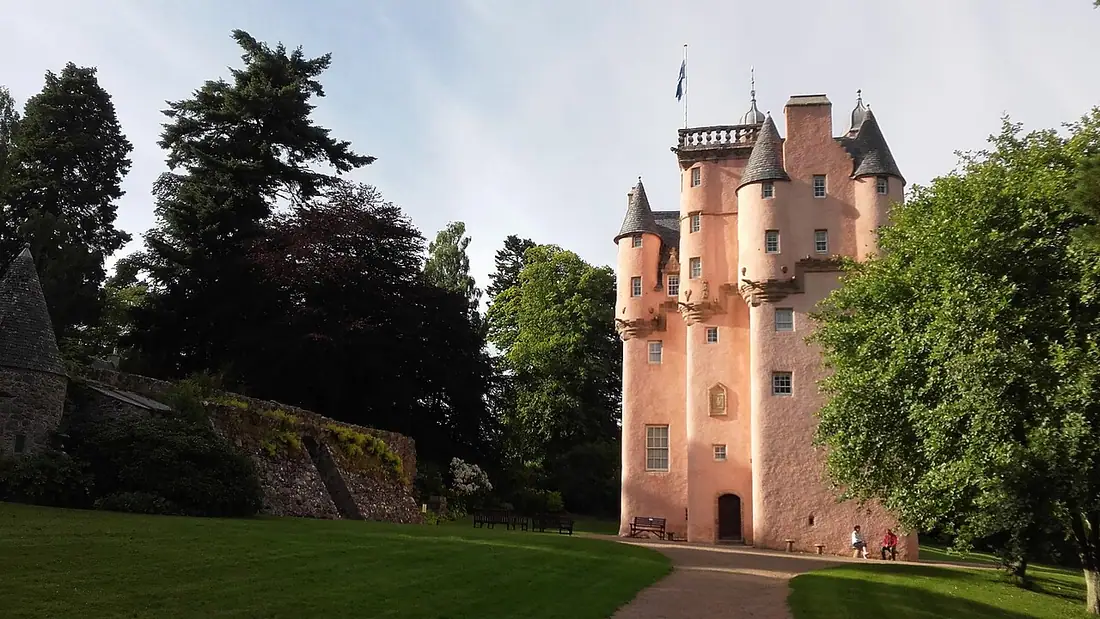
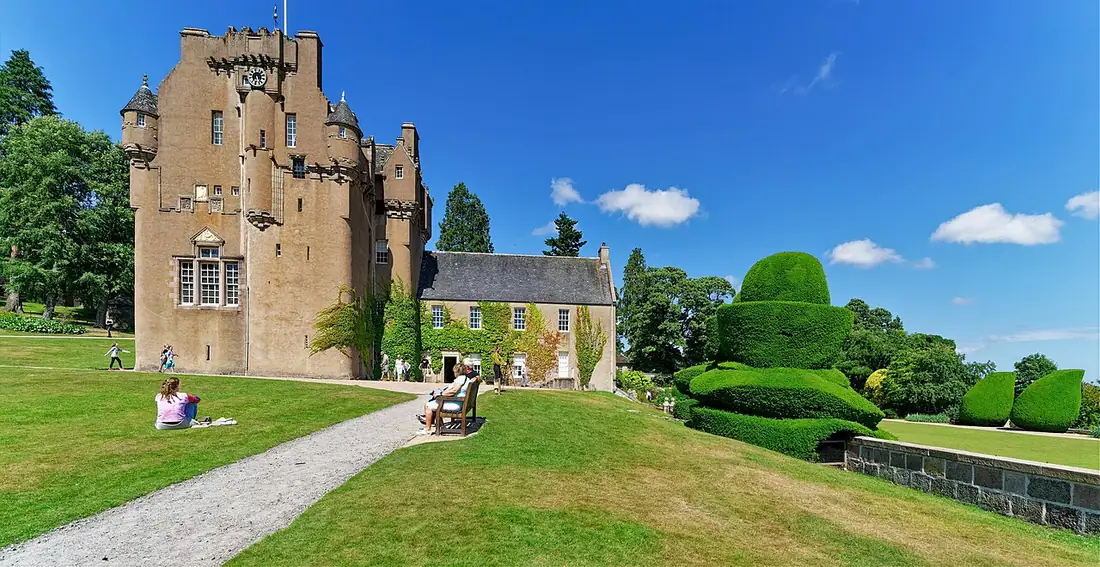
A full castle with curtain walls, flanking towers and a gatehouse needed a great lord’s income and men to hold it. A tower needed a modest estate and a mason.
So a laird with a few hundred acres could have one, and a great many did. Each tower counts as its own site today, which is why Scotland’s list reads so long beside countries where defence was concentrated in fewer, larger places.
Feuds kept demand steady. A tower did not have to survive a royal siege with engines and sappers. It had to hold off a neighbour’s men for a night, keep the livestock safe inside the barmkin wall, and let a household sit out trouble until it moved on. That is a low bar, and it was met over and over.
The plans fan out from there. Plain rectangles, L shapes with a wing, Z plans with towers at opposite corners so defenders could cover every face of the building. Our guide to the main castle types and how to tell them apart sets the shapes side by side.
Three centuries of border war with England
The Wars of Scottish Independence turned southern Scotland into a corridor for armies, and the fighting did not stop when the formal wars did. Raiding went on across the frontier for generations, until the two crowns came under one king.
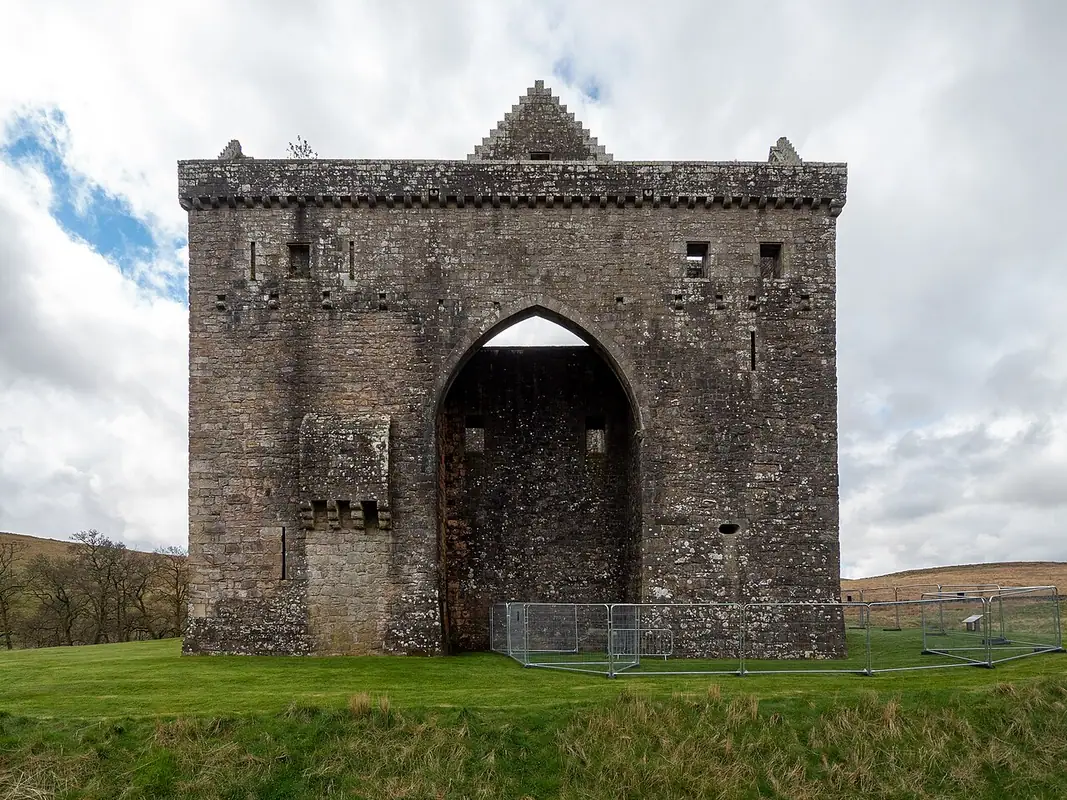
Border families answered with small, hard buildings. Peel towers and bastle houses are the stripped back version of the tower house, built to shelter a family upstairs and its animals below. Smailholm Tower in the Borders is the plain model, a lookout and refuge on a rock.
The bigger castles in the same zone were taken, damaged and rebuilt after every campaign, because whoever held them held the road. Hermitage, Caerlaverock, Roxburgh and Dunbar all changed hands more than once.
That cycle of ruin and repair left a thick band of castle sites across the south, far more than land of that size would carry on farming wealth alone.
Stone, lochs and crags: material and position
Scotland handed builders two gifts. The first is stone. Granite, sandstone and hard whinstone sit close to the surface across much of the country, so a thick wall was a local job rather than an expensive import.
The second is the ground. Volcanic plugs and rock ridges offer natural platforms with cliffs already in place, which is why Edinburgh Castle and Stirling Castle stand where they do. Islands and headlands do the same work on the coast and in the lochs. Threave sits on an island in the Dee, and Lochleven on an island in its loch.
That is also why wet ditches are less common here than in lowland England. If the site is already a crag or an island, nobody needs to dig, a point our guide on what moats were really for covers in full.
Does Scotland have more castles than anywhere else?
Scotland is always in the conversation, and by raw number of sites it has more than Wales or Ireland. There is no agreed total, though, because the word stretches from ruined towers to grass mounds to Victorian houses in castle dress. Wales is more often credited with the highest density per square mile.
Counts move with definitions, in other words. Historic Environment Scotland keeps the national record of historic sites, and it lists plenty of fragments that no visitor would recognise as a castle. Our guide on how many castles the UK has shows the ranges and what each one is counting.
When most Scottish castles went up, and where they cluster today
Earth and timber mottes came first, in the twelfth century, under kings who invited Norman families north and got their building habits with them. Stone keeps and curtain walls followed. The tower house then took over from the fourteenth century and stayed in fashion into the seventeenth. Our guide on when castles were built lays out the timeline.
A second wave muddles the count. Nineteenth century owners built Scottish baronial houses with turrets, crow stepped gables and battlements that never faced a weapon. Balmoral is the famous one, and the royal side of it sits in our guide to the castles the royal family owns in Scotland.
The clusters follow the history. Aberdeenshire is usually named for the thickest concentration, built on good farmland and a crowd of small lairds. Angus and Moray run close behind. The Borders are dense with towers because of the raiding. Fife has royal and courtier sites, and Argyll’s castles guard sea lochs rather than roads.
Where to go next
Start with the Scotland castle index, which breaks the country down by county so you can see the clusters for yourself and open any tower, keep or baronial pile on the map.
Questions
Why are there so many castles in Scotland?
Because defence stayed a private job for centuries. Scottish kings ruled through powerful families rather than over them, so lairds, chiefs and border families each built their own strong house. Stone was easy to get, the tower house was cheap enough for a small estate, and feuding and war with England kept demand up long after English landowners had stopped fortifying their homes.
Why were castles built in Scotland?
For the same reasons as anywhere else, but for longer. A castle held land, housed a family and its servants, stored rent paid in grain and cattle, and gave somewhere to retreat to when a rival or a raiding party arrived. In Scotland it also marked status, since a tower told everyone who the local power was.
When were castles in Scotland built?
Earth and timber castles arrived in the twelfth century with Norman families invited north by Scottish kings. Stone keeps and curtain walls followed. The tower house took over from the fourteenth century and stayed in fashion into the seventeenth, far later than in England. A second wave of castle style country houses went up in the nineteenth century.
Does Scotland have the most castles in the world?
There is no agreed total, so there is no clean winner. Scotland has a very large number of castle sites, more than Wales or Ireland by raw count, but Wales is usually credited with the highest density per square mile. The answer swings on whether you count ruins, grass mounds and Victorian houses built in castle dress.
What is a Scottish tower house?
A tall stone home stacked floor on floor, with a vaulted storage basement, a hall above it, bedchambers over that and a parapet on the roof. One door, small windows and a stair inside the wall thickness. Plans include plain rectangles, L shapes with a wing, and Z plans with towers at opposite corners to cover every wall.
Which part of Scotland has the most castles?
Aberdeenshire is usually named for the thickest concentration, thanks to the number of laird's tower houses built there and the share of them still standing. Angus, Moray, Fife, the Scottish Borders and the sea lochs of Argyll all have dense groups too, each for a different mix of farming wealth, raiding and coastal control.