Henry VIII Castles: The Tudor Coastal Forts and Where to Visit Them
Henry VIII castles are Tudor gun forts, not medieval keeps. Why Deal, Walmer, Camber, Pendennis and St Mawes look so strange, and which ones you can visit.
Henry VIII castles are the low, round artillery forts that Henry ordered along the English coast from 1539, when he expected an invasion backed by the Pope. The best known are Deal, Walmer, Camber, Pendennis, St Mawes, Portland, Calshot and Southsea, and most of them are open to visit today. Road signs and maps call them castles, but they were built as gun batteries for a war at sea.
Why Henry VIII’s castles look nothing like medieval ones
Stand in front of Deal and the thing looks wrong. No tall keep, no hill, no show gatehouse. It sits low in a hollow behind a dry ditch like a six petalled flower pressed into the shingle.
The job had changed. Medieval castles were built to hold territory and house a lord, which is most of why castles were built in the first place. Henry’s forts held no land and housed nobody important. They covered water: harbours, anchorages and estuary mouths where a French or Imperial fleet might put soldiers ashore.
They were also crown property from day one, run by a captain, a master gunner and a handful of soldiers. No hall for feasting, no lordship attached. That is one reason the line between a castle, a palace and a fort gets blurry once you reach the Tudors.
The Device Forts of 1539: Deal, Walmer and Camber
In 1538 France and the Emperor stopped fighting each other. Henry, newly excommunicated, faced the prospect of both at once. His answer was a written scheme, known as the device, which named stretches of coast and the works needed on each. Historians call the results the Device Forts, or Henrician castles.
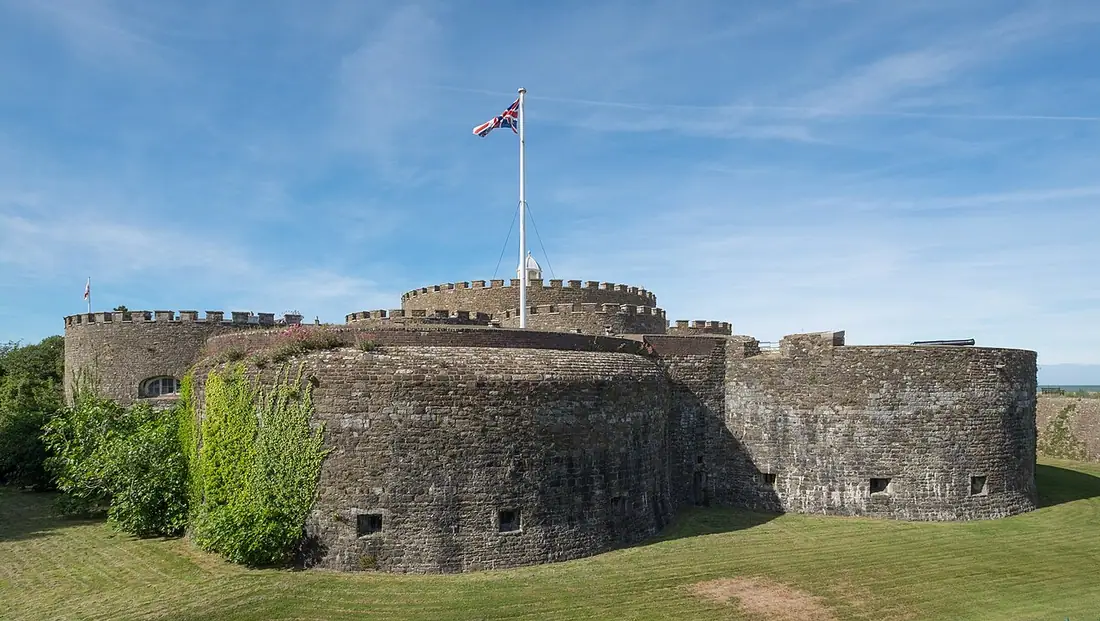
Much of the money and some of the stone came from the dissolution of the monasteries, with material carted from religious houses that had just been closed.
Three went up together on the Downs in Kent, the sheltered anchorage inside the Goodwin Sands. Sandown, Deal and Walmer stood in a line linked by earthworks. Deal is the largest and most complete: a round central tower inside six semicircular bastions, inside six more. Walmer is smaller, four lobes around a core. Sandown has mostly gone into the sea, and a lump of masonry on the beach is what is left.
Camber Castle near Rye is the odd one. It guarded the harbour serving Rye and Winchelsea and now stands a mile from the water. Like Deal, it has a dry ditch rather than a wet one, so if you came here looking for the usual reason castles had moats, these forts are a different animal. The ditch was there to keep infantry off the gun ports.
Pendennis, St Mawes and the Cornish coast
Falmouth has the best pair. The Carrick Roads is a deep water anchorage, so Henry put a fort on each side of the entrance and let their guns cross fire over the channel.
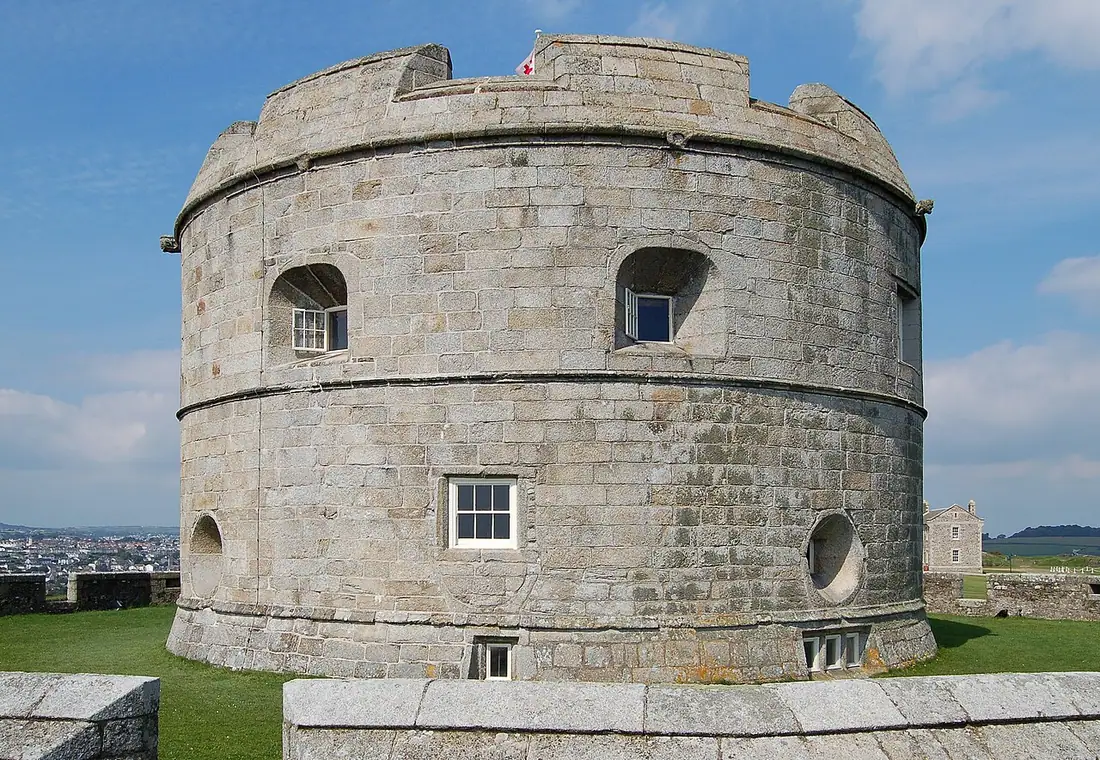
Pendennis sits high on its headland above Falmouth, a round tower and gun platform later wrapped in Elizabethan ramparts, and it held out through a long siege in the Civil War. St Mawes faces it from the east: a clover of three bastions around a central tower, with Latin inscriptions flattering the king carved into the stone.
Further west the chain thins out. St Catherine’s Castle above Fowey is a small two storey blockhouse on a cliff path, the sort of thing that turns up all round the south west. If this is your kind of site, the same coast has plenty of older clifftop and coastal castles within an easy drive.
Artillery fort or castle? What changed in the design
What the designers changed
- Height went. Tall walls make a good target and fail badly under round shot, so the new forts are squat and curved, and shot glances off a rounded parapet.
- Walls got fat. Rubble cores several metres thick, faced in cut stone, often with earth banked behind.
- Openings changed. Instead of arrow loops you get wide splayed gun ports low down, vents to clear powder smoke, and flat roof platforms for lighter pieces.
- Living space shrank. Small rooms, a kitchen, a well and a magazine, with nothing built for display.
Set them beside the four main castle types and they sit right at the end of the sequence, after motte and bailey, stone keep and concentric. Rounded bastions were already going out of fashion in Italy, where engineers had moved to pointed angle bastions that left no blind spots. Yarmouth Castle on the Isle of Wight, built at the very end of the reign, has an arrowhead bastion and shows what came next.
Older castles given guns
Not everything was new. Portchester in Hampshire, a medieval castle inside Roman walls, was patched and re-armed rather than replaced. Dartmouth in Devon had purpose built gun ports before Henry’s programme even started. A fair number of sites on this map are medieval work with Tudor gun positions cut into it.
Which Henry VIII castles can you visit today?
- Deal Castle, Kent. The fullest surviving device fort, and the one to see if you only see one.
- Walmer Castle, Kent. A fort turned official residence, with large gardens.
- Camber Castle, East Sussex. A ruined shell on a nature reserve. Access is limited, so check before you go.
- Pendennis Castle, Cornwall. Tudor tower inside later ramparts, high above Falmouth.
- St Mawes Castle, Cornwall. The best preserved of the Cornish pair, across the water from Pendennis.
- Portland Castle, Dorset. Fan shaped gun room facing Portland Harbour.
- Calshot Castle, Hampshire. A keep on a shingle spit at the mouth of Southampton Water.
- Southsea Castle, Portsmouth. Run by the city. Henry is said to have watched the Mary Rose sink from near here.
- Yarmouth Castle, Isle of Wight. The last of the programme, with that early angle bastion.
- Sandsfoot Castle, Weymouth. A free ruin in a public garden, the partner to Portland across the bay.
Where to go next
Pick a stretch of coast and see what else is near it. The map of castles across the UK and Ireland puts the Tudor gun forts next to the medieval castles around them, which is the fastest way to see just how different they are.
Questions
How many castles did Henry VIII build?
Counts vary depending on what you include, because the programme covered everything from large forts down to small blockhouses and earth batteries. The range usually quoted is around thirty new works along the English coast, plus repairs and new gun platforms at older castles. Deal, Walmer, Camber, Pendennis, St Mawes, Portland, Calshot, Southsea and Yarmouth are the ones most people mean.
Why is Camber Castle now a mile from the sea?
The sea left it behind. Camber was built to cover the harbour serving Rye and Winchelsea, but shingle kept piling up along that coast and the marsh behind it was drained and reclaimed. The shoreline moved seaward, the harbour silted, and the fort was stranded inland and abandoned. It now sits in grazing marsh on a nature reserve.
Are Henry VIII's forts the same as Martello towers?
No. Martello towers were built against Napoleon, roughly two and a half centuries later, and each is a small round tower carrying one gun on the roof. Henry's forts are far wider than they are tall and were designed to hold many guns at several levels. Both sit on the same Kent and Sussex coast, which is why people mix them up.
Did Henry VIII build coastal forts in Wales, Scotland or Ireland?
The device programme was English and aimed at the Channel approaches, so the surviving forts run from the Thames estuary round to Cornwall, with a cluster on the Solent and the Isle of Wight. Scotland was a separate kingdom doing its own artillery work, such as the gun defences at Blackness on the Forth. Wales and Ireland have nothing of the Deal and St Mawes kind.
Is Walmer Castle still a Henry VIII fort underneath?
Yes, under the additions. Walmer began as a quatrefoil device fort, four semicircular bastions around a central core, and that shape is still easy to read on the ground. It was later converted into the official residence of the Lord Warden of the Cinque Ports, so the inside now feels like a country house with gardens rather than a gun platform.