Best Castles in Scotland for Kids: Which Ones Hold Their Attention
The best castles in Scotland for kids, picked for tunnels, towers, play parks and beaches, plus the clifftop ruins to skip with toddlers and what entry costs.
The best castles in Scotland for kids are the ones with stairs to climb, dark spaces to crawl into and open ground to run on. Stirling, Doune, St Andrews, Craigmillar, Urquhart, Culzean and Brodick all pass that test, and every one of them is open to the public. Historic importance and a good family day out are not the same thing, which is why this list looks different from most.
Most Scottish castles are private homes, hotels or ruins on farmland with no public access. The ones you can walk into belong mainly to Historic Environment Scotland, the National Trust for Scotland or private estates, and the full map of castles in the UK and Ireland shows where they sit.
What makes a castle work for children
Four things, in rough order: something to climb, something dark, space to run, and a toilet and a cafe near the gate. A tall tower with a stair to the top beats a famous site reduced to low walls and mown grass, which most children just read as a field.
Short visits win too. Two hours at a castle with a playground attached lands better than four hours of rooms and labels.
Which Scottish castles have dungeons, towers and tunnels to climb?
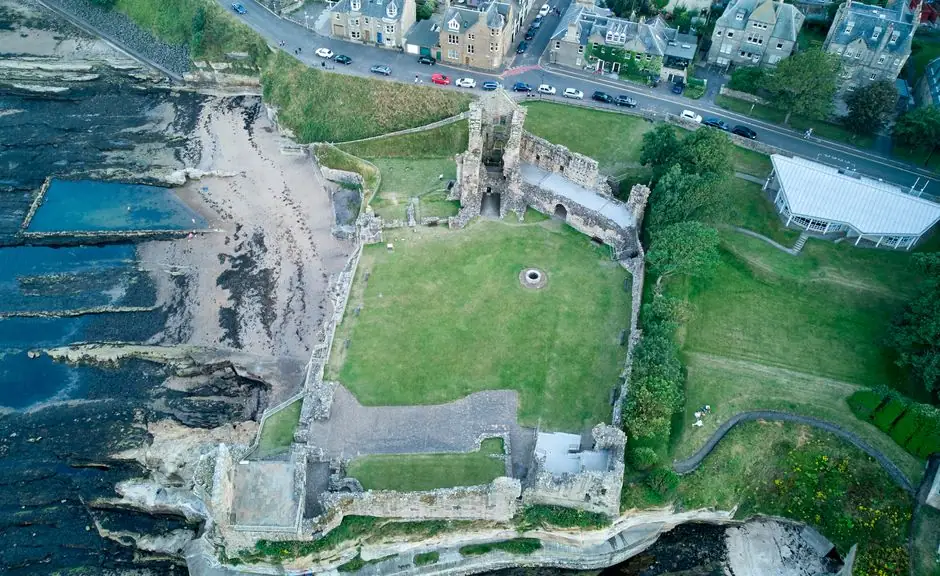
St Andrews Castle in Fife has the strongest single feature for children anywhere in Scotland. A siege mine cut through solid rock runs under the street, and you can walk and crouch your way along it. The bottle dungeon beside it is a pit carved into the rock with a hatch at the top.
Doune Castle, north west of Stirling, has a spiral stair to the battlements, a cavernous kitchen and an audio guide recorded by Terry Jones. Monty Python and the Holy Grail was filmed there, and older kids may recognise the same courtyard as Winterfell from the Game of Thrones pilot.
Craigmillar Castle, on the south east edge of Edinburgh, is a warren of stairs, passages and small rooms you explore at your own pace. It is one of several castles within reach of Edinburgh that children get more out of than the famous one on the rock.
Edinburgh Castle still earns its ticket for the One O’Clock Gun, which fires Monday to Saturday, the siege cannon Mons Meg, and the prisoner of war vaults with their hammocks and carved graffiti. Expect crowds, steep cobbles and a timed entry slot.
Urquhart Castle on Loch Ness has a tower with a stair and a viewing platform, plus a full size replica siege engine in the grounds. If the dark corners are the real draw, which castles still have their dungeons is the next page to read.
Castles with grounds, playparks and beaches attached
Some castles are worth the trip for what sits outside the walls.
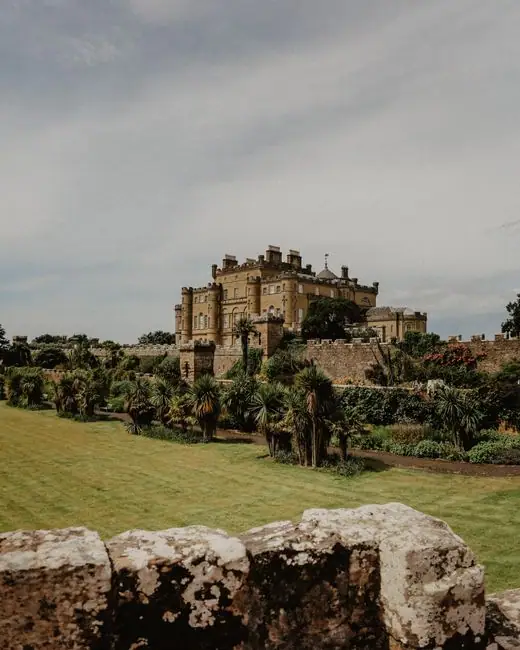
- Culzean Castle, South Ayrshire: a clifftop house in a large country park, with woodland play areas, a walled garden and a path down to the beach.
- Brodick Castle, Isle of Arran: a big woodland playground and miles of estate paths, reached by the ferry from Ardrossan.
- Blair Castle, Perth and Kinross: an entrance hall lined with weapons, then gardens and woodland walks for the rest of the day.
- Dirleton Castle, East Lothian: a low ruin with wide lawns and gardens, which suits toddlers better than any tower house.
- Dunrobin Castle, Sutherland: falconry displays in the formal gardens during the open season.
Water helps as well. Clifftop and coastal castles give you a beach to follow the castle, the castles with moats include Caerlaverock in the south west, where you cross standing water to get in, and the castles on Skye include Dunvegan, where boat trips run out to the seal colony.
Which ruins are safe, and which are a hard no with toddlers
Walled courtyard castles with one gate are the easy ones. Doune, Craigmillar, Dirleton and Blackness all let you see where everybody is.
Cliff castles are the opposite. Dunnottar near Stonehaven means a long path, a steep flight of steps and unfenced drops at the top, so it is a poor choice with a pushchair or a child who bolts. Tantallon in East Lothian sits on the same kind of edge.
Tidal and island ruins such as Castle Tioram need the tide checked, and the inside is closed off. Keep those for school age children.
Few medieval castles have lifts. A carrier beats a pushchair almost everywhere, and some sites have space to leave a buggy, which is worth asking about at the ticket desk.
What does a family day at a Scottish castle cost?
Prices change year to year and vary a lot by site, so the operator’s ticket page is the only number to trust. A small tower house runs to a few pounds a head. Edinburgh and Stirling sit at the top end, and both sell a family ticket that comes in under two adult plus two child tickets bought separately.
Young children go free at most places, though the cut off is set by the operator and lands somewhere around five to seven years old. Check the age bands before you budget.
Planning more than a couple of visits changes the maths. Compare membership of Historic Environment Scotland or the National Trust for Scotland, or a short term Explorer Pass, against the tickets you would otherwise buy. Two or three of the bigger castles often covers it.
Rainy-day castles with indoor rooms and exhibitions
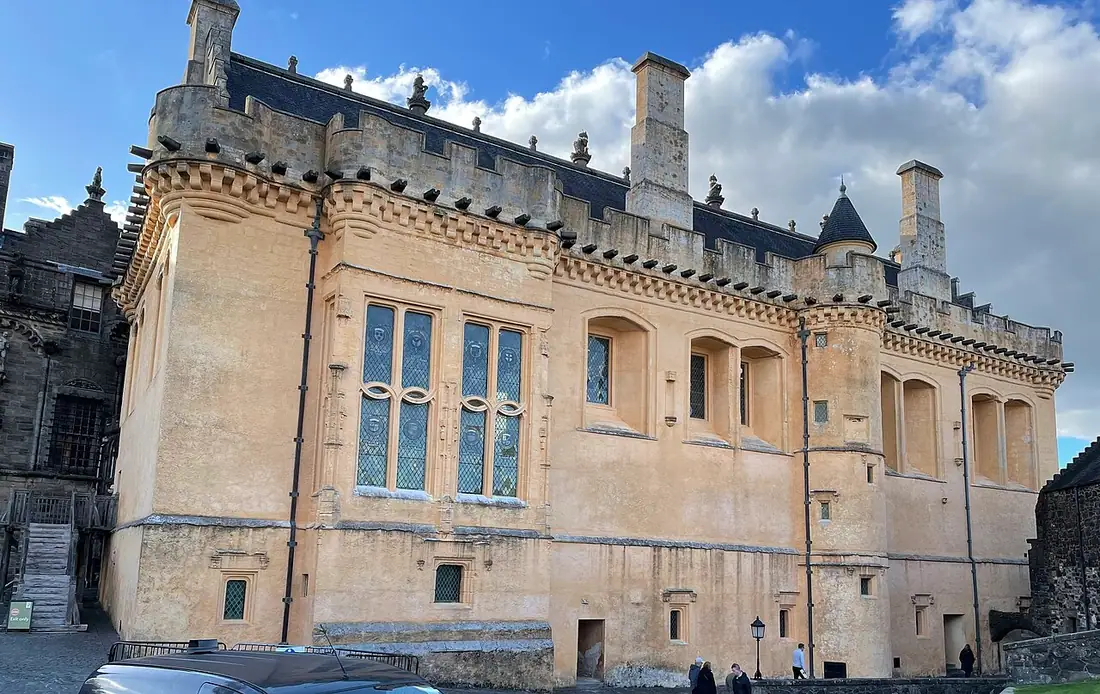
Stirling Castle is the best wet weather castle in Scotland. The restored Royal Palace, the Great Hall and the great kitchens with their laid out model food are all under a roof, with costumed guides in character to answer questions.
Edinburgh Castle keeps you indoors across the vaults, the National War Museum and the Honours of Scotland. Blair Castle runs to around 30 rooms. Culzean has the house as well as the park, so a wet day there is not wasted.
Where to go next
Work out what is near where you are staying. Start with all the castles in Scotland and narrow down by county from there.
Questions
Which Scottish castle is the best first visit for a young child?
Dirleton Castle in East Lothian or Culzean Castle in South Ayrshire. Both pair a castle with wide open grounds, so a short look round the walls can be followed by a long run outside. Neither needs a child to stay quiet indoors for an hour, which is where most first castle visits come unstuck.
Are castles in Scotland open to the public all year?
The big ones are. Edinburgh, Stirling, Urquhart and Doune open daily through the year on shorter winter hours. Many smaller ruins run on a spring to autumn season or weekends only in winter, and privately owned castles and their gardens often close completely for several months. Always check the castle's own opening times before you set off.
Can you take a pushchair round a Scottish castle?
Rarely with any comfort. Cobbles, spiral stairs, narrow doorways and steep approach paths defeat most buggies, and lifts are unusual in medieval buildings. A back carrier or sling works far better. Visitor centres, cafes and gardens are usually level and accessible even where the castle itself is not, so plan around those.
What age do children start to enjoy castles?
Around four or five is when the climbing, hiding and spotting starts to click. Under that, the grounds matter more than the building. From about seven, children get real value from siege tunnels, dungeons, cannon and audio guides, and they can manage the stairs and distances without being carried for half the visit.
Is Edinburgh Castle or Stirling Castle better with kids?
Stirling, for most families. It has more to walk into, fewer crowds, costumed guides who talk to children, and the great kitchens laid out with model food. Edinburgh wins on spectacle, with the One O'Clock Gun, Mons Meg and the prison vaults, but it means timed tickets, steep cobbles and queues in summer.