Best Castles in Northern Ireland to Visit: The Antrim Coast and Beyond
The best castles in Northern Ireland to visit, from Dunluce and Carrickfergus to Castle Ward and Enniskillen, plus which are free and which are a locked shell.
The best castles in Northern Ireland to visit are Dunluce, Carrickfergus, Dundrum, Castle Ward, Enniskillen and Kinbane. All six are open to the public, and they split into two easy trips: the Causeway Coast in County Antrim, and a loop south and west through County Down and Fermanagh. The whole list fits into three unhurried days.
One warning before you set off. Plenty of places marked castle on a map here turn out to be a private house, a hotel, or one ivy covered wall in a field. The map of castles across the UK and Ireland shows which is which, and most of the ruins you can walk into sit in state care under the Department for Communities.
Northern Ireland’s castles in one short list
- Dunluce Castle, County Antrim. Clifftop ruin on the Causeway Coast. Ticketed, staffed, the best single stop.
- Kinbane Castle, County Antrim. Free ruin on a white limestone headland at the foot of a long stair.
- Dunseverick Castle, County Antrim. A fragment of gatehouse on a rock. Free, two minutes off the road.
- Carrickfergus Castle, County Antrim. The Norman keep on Belfast Lough, and the most complete castle in the north.
- Dundrum Castle, County Down. Circular Norman keep on a hill, with Dundrum Bay below and the Mournes behind.
- Castle Ward, County Down. A National Trust estate on Strangford Lough with a tower house and film locations.
- Enniskillen Castle, County Fermanagh. Keep and watergate on the River Erne, with two museums inside.
- Belfast Castle. Scottish baronial house on the slope of Cave Hill, free to enter, long views over the city.
Which castles on the Causeway Coastal Route are worth stopping for?
Dunluce Castle is the one to plan the day around. It stands on a basalt stack between Portrush and Bushmills, cut off from the mainland by a gap you cross on a bridge, with a sea cave running underneath. There is a visitor centre, an admission charge, and enough standing masonry to read the gatehouse, courtyard and hall.
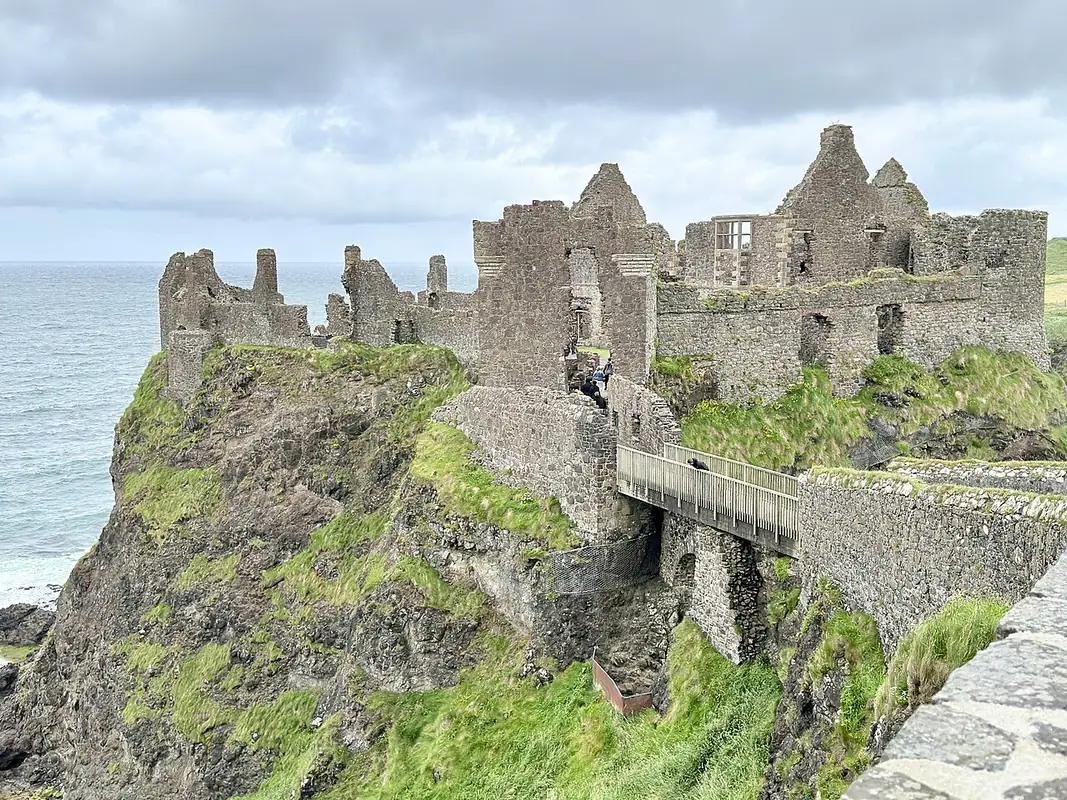
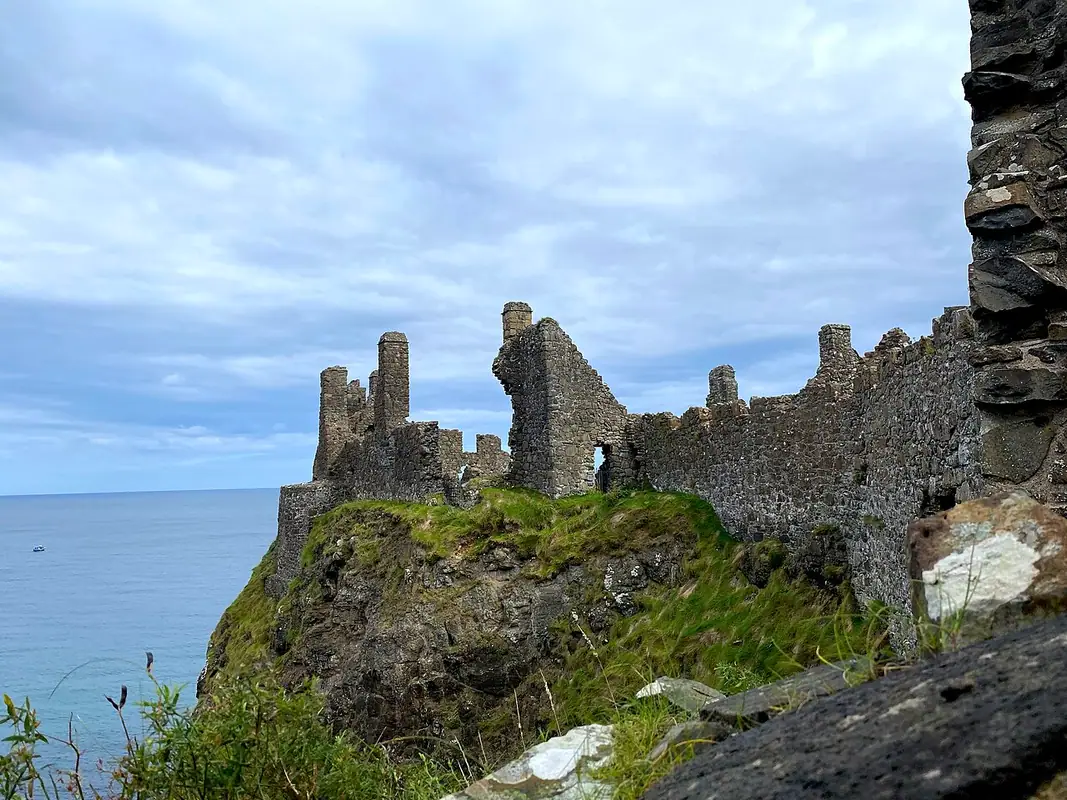
Viewers of the television series will know it already. Dunluce stood in for the Iron Islands in Game of Thrones, and if screen locations are the pull, castles used for filming covers the rest. The tale about part of the kitchen dropping into the sea with the staff inside is local tradition rather than record, and the documented history of the site is dramatic enough without it.
Kinbane Castle, west of Ballycastle, is a different sort of stop. A thin ruin sits on a bright limestone headland running out into the water, and you reach it down a steep flight of more than a hundred steps. Entry is free and nobody is there to sell you anything. In wind or wet the steps are the hard part, not the castle.
Dunseverick Castle is barely a castle now. One ruined gatehouse block perches on a rock east of the Giant’s Causeway, free to see, with the Causeway Coast Way footpath running past. Give it ten minutes and a photograph, then move on.
Carrickfergus and the Norman castles of Antrim
Carrickfergus Castle is the one to visit if you want a castle with floors, stairs and a roof. John de Courcy started it in the late 1170s on a rock in Belfast Lough, and later owners kept adding to it rather than abandoning it. The result is one of the best preserved Norman castles in Ireland.
It has closed in stretches for conservation work, so check it is open on the day before you drive out. The town quay and the lough shore beside it make the trip worthwhile even if the gates are shut.
The rest of County Antrim is thinner than the map suggests. Antrim Castle burned and never came back, so what you visit now is the gardens and the surviving house beside them. Red Bay Castle near Cushendall is a red sandstone shell above the road, Olderfleet at Larne is a single tower stump, and Glenarm and Shane’s Castle are private homes where the gardens and estate events, not the buildings, are what open to visitors.
County Down and Fermanagh: Castle Ward, Dundrum and Enniskillen
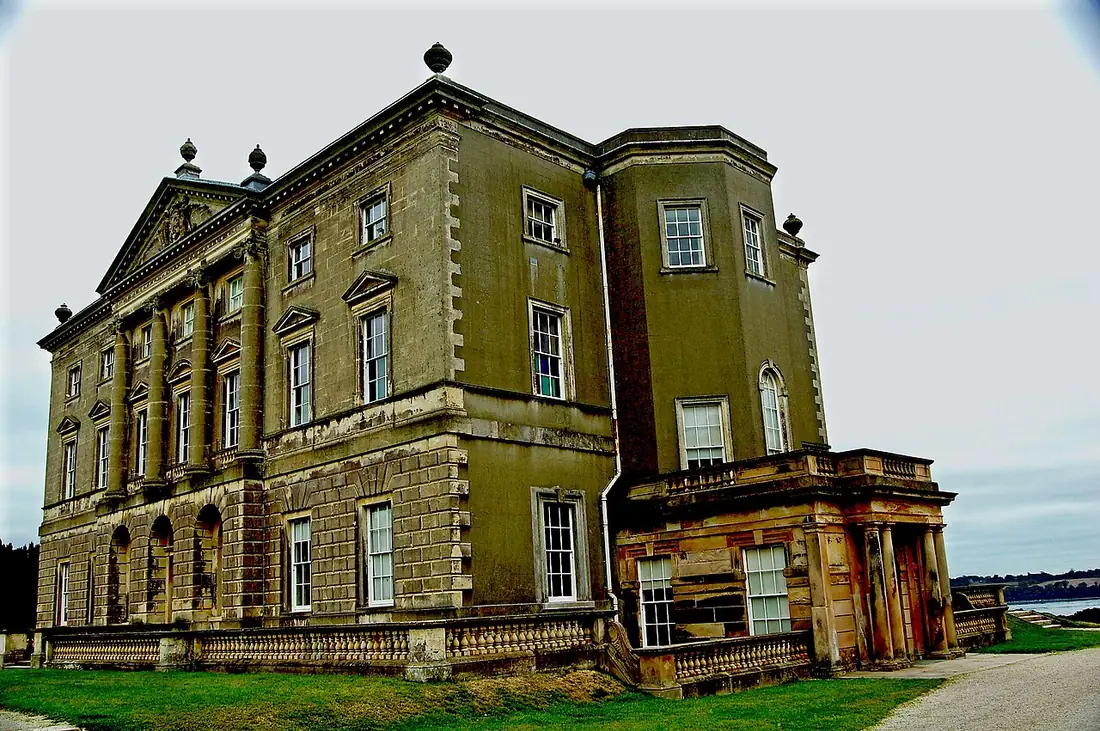
Castle Ward on Strangford Lough is the strongest day out in County Down. The National Trust estate takes in a famously split personality house, classical on one side and gothic on the other, the Old Castle Ward tower house, woodland and shore paths, and the farmyard that served as the Winterfell courtyard. Audley’s Castle, a tower house on a ridge over the water, is a short walk or drive away and free.
Dundrum Castle is the pick for scenery. The circular keep stands on a wooded hill above Dundrum Bay with the Mourne Mountains behind it, entry is free, and you can be up, round and back down in half an hour.
Strangford and the Down coast are full of small tower houses: Kilclief, Jordan’s Castle at Ardglass, Quoile, Sketrick, Portaferry and Greencastle near Carlingford Lough. Several open on limited hours or are kept locked with a keyholder nearby, so look up each one rather than assuming.
Fermanagh is the quiet surprise. Enniskillen Castle sits on the Erne with its watergate towers and two museums inside, Tully Castle above Lower Lough Erne pairs a burnt out plantation house with a recreated seventeenth century garden, and Monea Castle is a free roadside ruin whose round corner towers look Scottish because the builders were. The county list for Fermanagh has the smaller sites around Lough Erne.
Castles you can stay in or get married in
Ballygally Castle on the Antrim coast road is the easy answer for a night in one. It began as a Scottish style fortified house and runs as a hotel now, which makes it a practical base for the northern half of the drive.
Belfast Castle handles weddings and functions, and Killyleagh Castle in County Down is a private family home, said to be among the longest inhabited in Ireland, with self catering lets in the gatehouse towers. The castle itself is not a public attraction, so admire it from the village street.
If you are also visiting National Trust or heritage sites in England, Scotland or Wales on the same trip, check whether a pass or membership pays for itself before you buy single tickets.
Driving the coast road: order, timings and ferry links
Drive it north from Belfast and the castles fall in a sensible order: Carrickfergus, Larne, Glenarm, the Glens around Cushendun, Ballycastle for Kinbane, then Dunseverick, the Giant’s Causeway, Dunluce and Portrush, finishing at Derry, which has city walls rather than a castle.
Allow two days. The coastal section is slow by design, with single carriageway, parking squeezes in summer, and short winter daylight that catches people out.
Ferries make this easy to join up with Scotland. Sailings run from Larne and Belfast to Cairnryan in the south west, which puts Galloway and Ayrshire inside a morning’s drive, and the Scottish castle touring options take over from there.
Where to go next
If the clifftop ruins are what brought you here, read the guide to castles by the sea next. It carries the same idea round the rest of Britain and Ireland, from Antrim’s basalt stacks to the sea cliffs of Cornwall and Aberdeenshire.
Castles by the sea is the page to open before you book the ferry.
Questions
Is Dunluce Castle worth the admission charge?
Yes, if you want one proper castle visit on the Causeway Coast. You get a staffed visitor centre, a bridge over the chasm, and enough standing walls to read the gatehouse, courtyard and hall. The setting on its own rock stack is the best of any castle in the north. The free coastal ruins nearby are a ten minute look by comparison.
How long do you need for the Causeway Coastal Route if you want the castles?
Two days is the comfortable answer. Belfast to Derry the coastal way runs roughly 120 miles, and you can drive it in a day, but not with Carrickfergus, Kinbane, Dunseverick, Dunluce and the Giant's Causeway added. Stay a night around Ballycastle or Portrush and the castles stop feeling like a race against the light.
Which castles in Northern Ireland are free to visit?
Most of the small ruins in state care cost nothing. Dundrum, Kinbane, Dunseverick, Monea, Tully and several Strangford Lough tower houses are free, and Belfast Castle is free to walk into. The ticketed ones are the staffed sites: Dunluce, Carrickfergus, Enniskillen Castle with its museums, and the National Trust estate at Castle Ward.
What is the oldest castle in Northern Ireland?
Carrickfergus, in County Antrim. John de Courcy began it in the late 1170s as the stronghold of his Norman lordship of Ulster, and the inner ward and great keep are the oldest surviving castle work in the region. It stayed in military hands into the twentieth century, which is a large part of why so much of it is still standing.
Is Hillsborough Castle a real castle?
Not in the medieval sense. Hillsborough in County Down is a Georgian country mansion that took the castle name from the earlier fortified site in the village. There are no battlements, no keep and no moat. It is still worth a visit for the gardens and the house tour, but go for the rooms and planting, not for defence.